
Commercial Space Hardware
Satellite structure panels, optical payload housings, attitude control hardware and thermal management parts, with AMS materials, full traceability and an engineering review on every order.
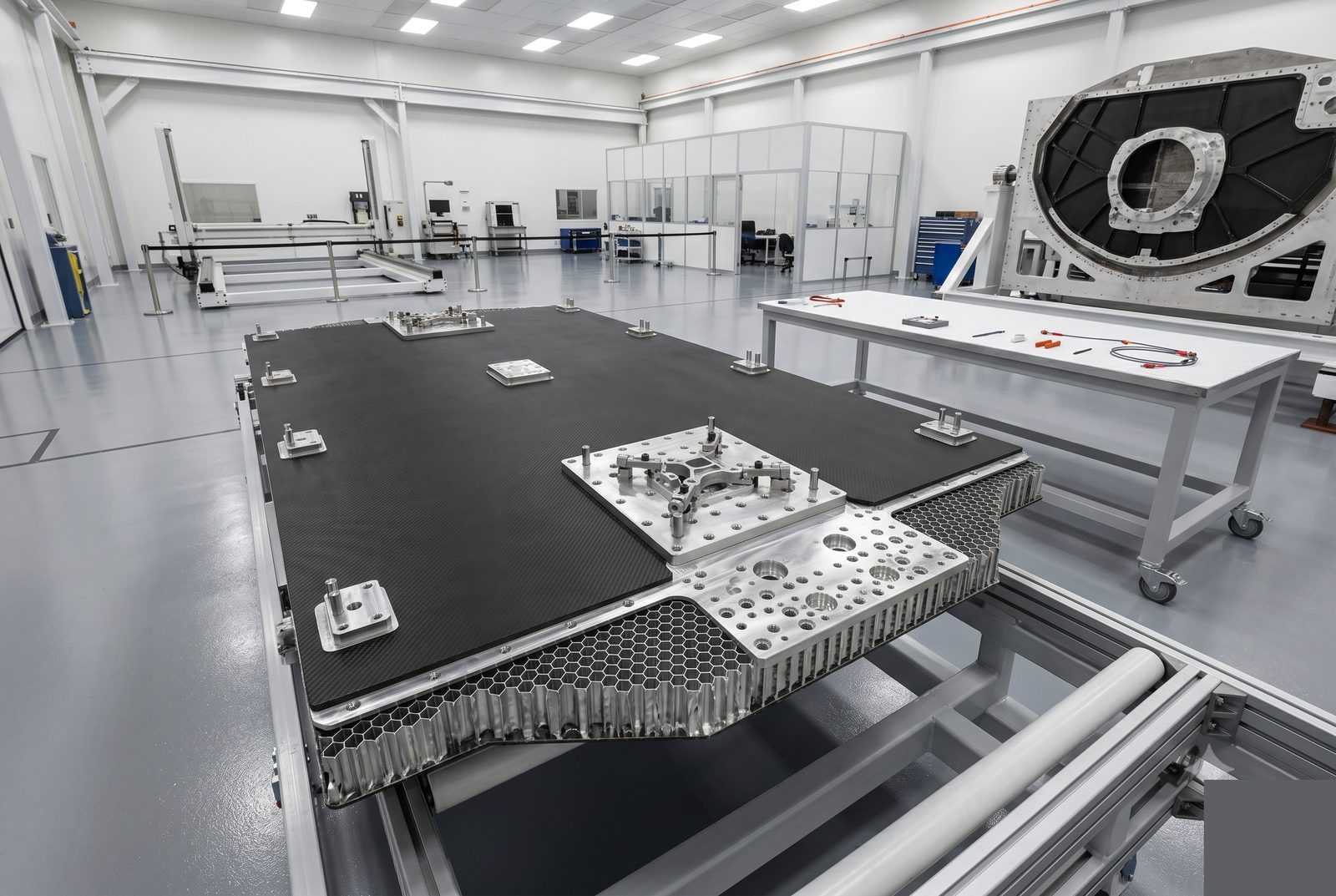
Space Hardware, Built to Spec
Each card gives the tolerance, material and finish these parts usually carry. Every part ships with full material traceability.
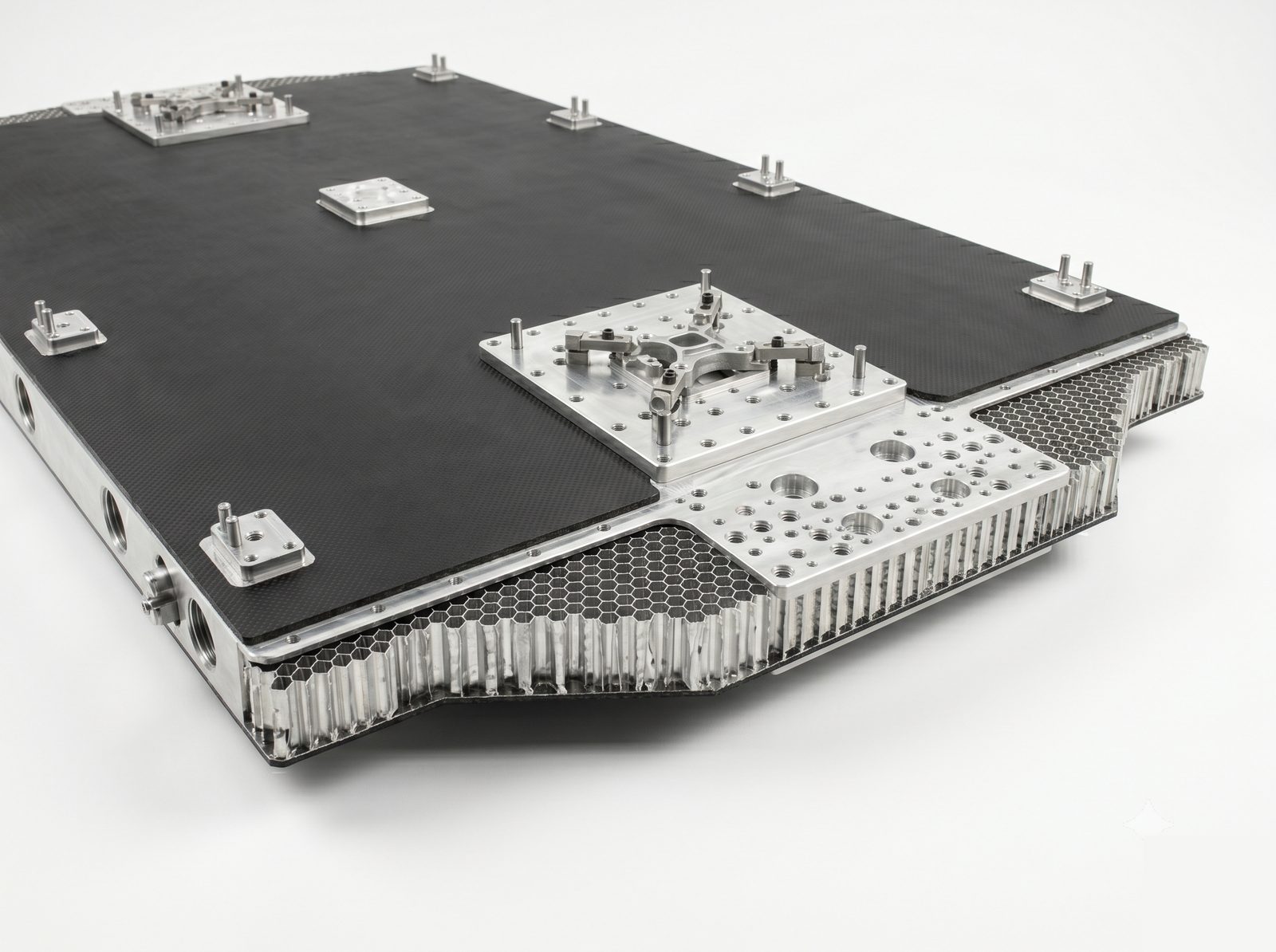
Satellite Structure Panels
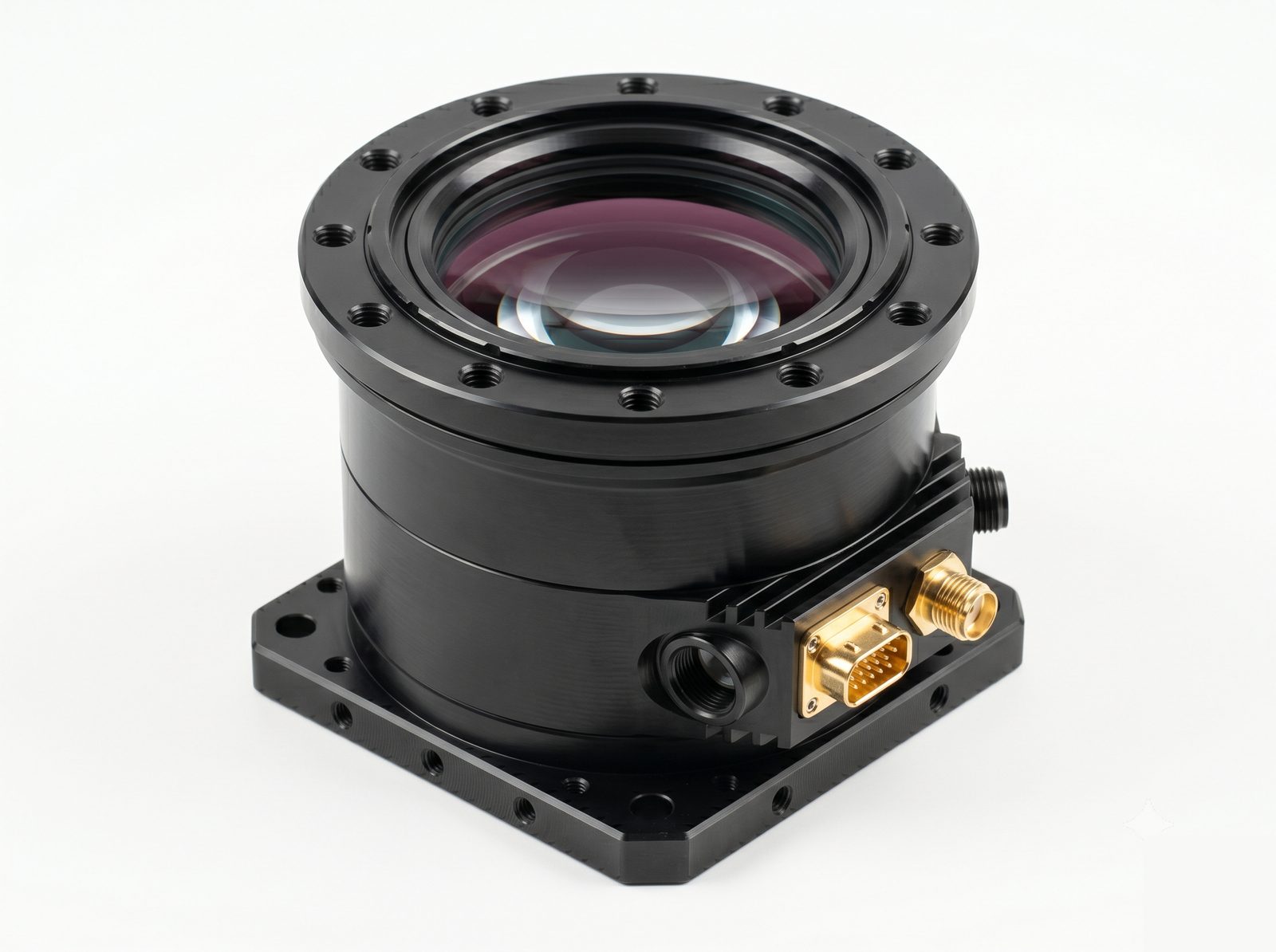
Optical Payload Housings
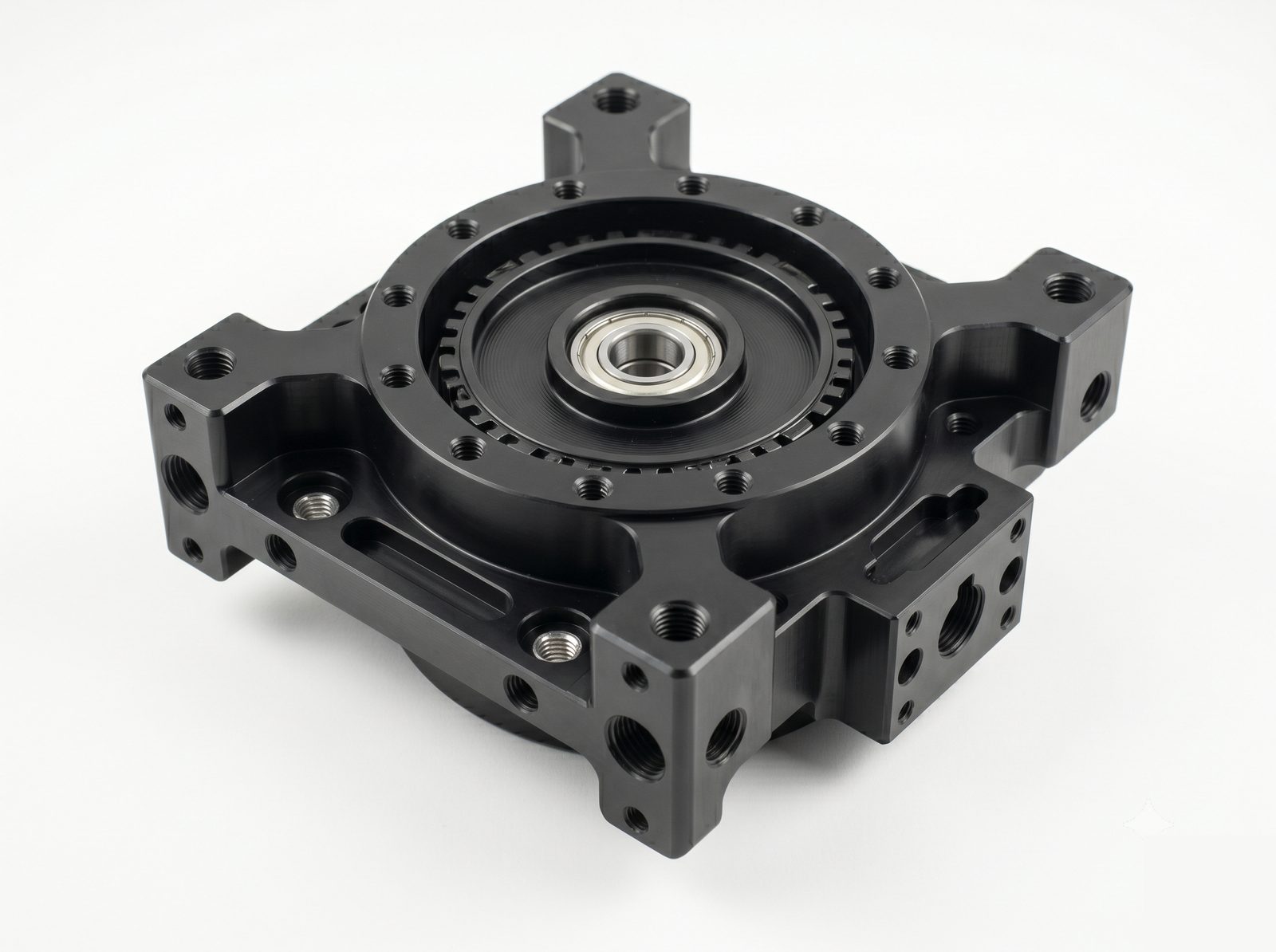
Attitude Control Hardware
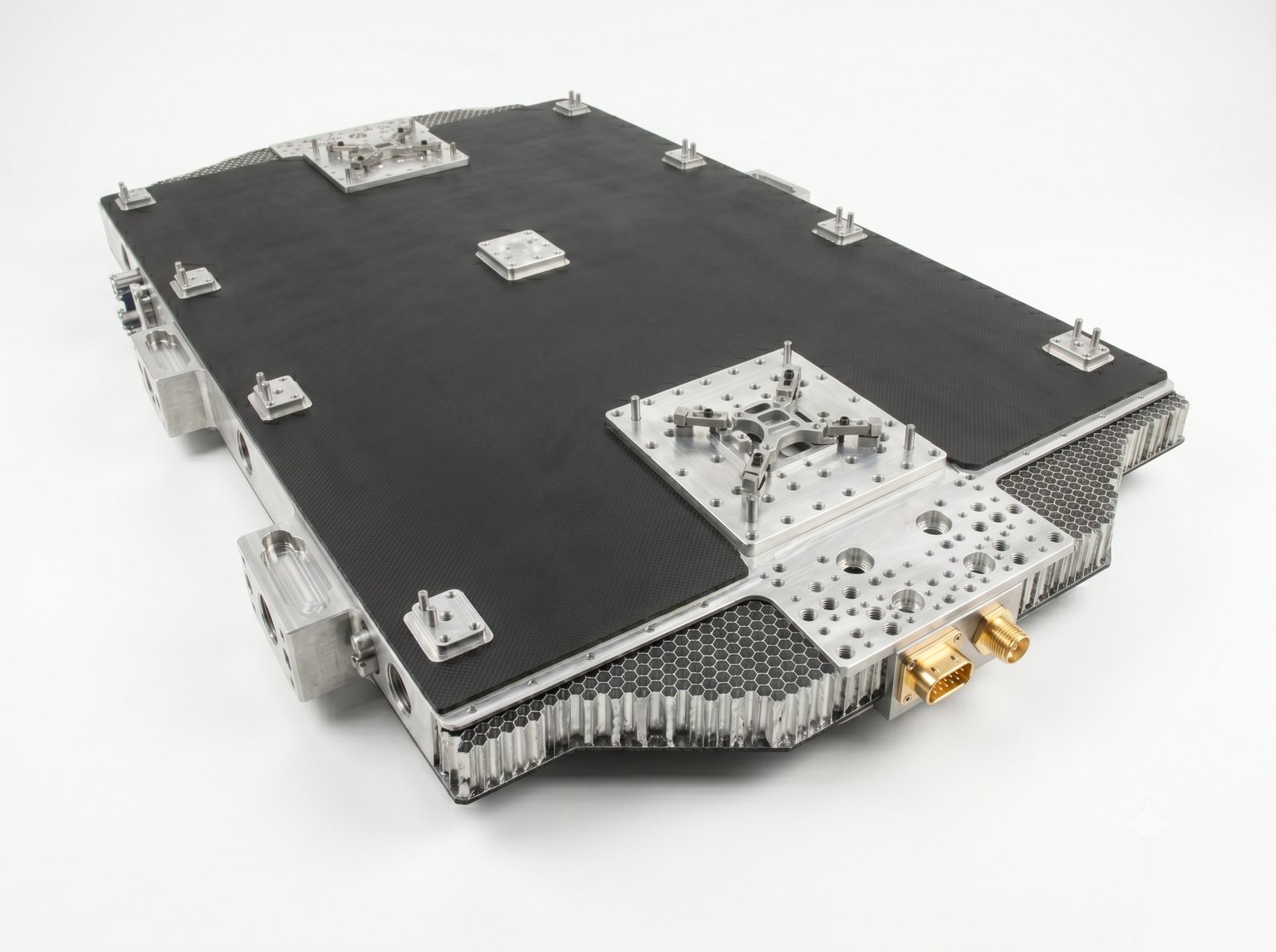
Thermal Control Components
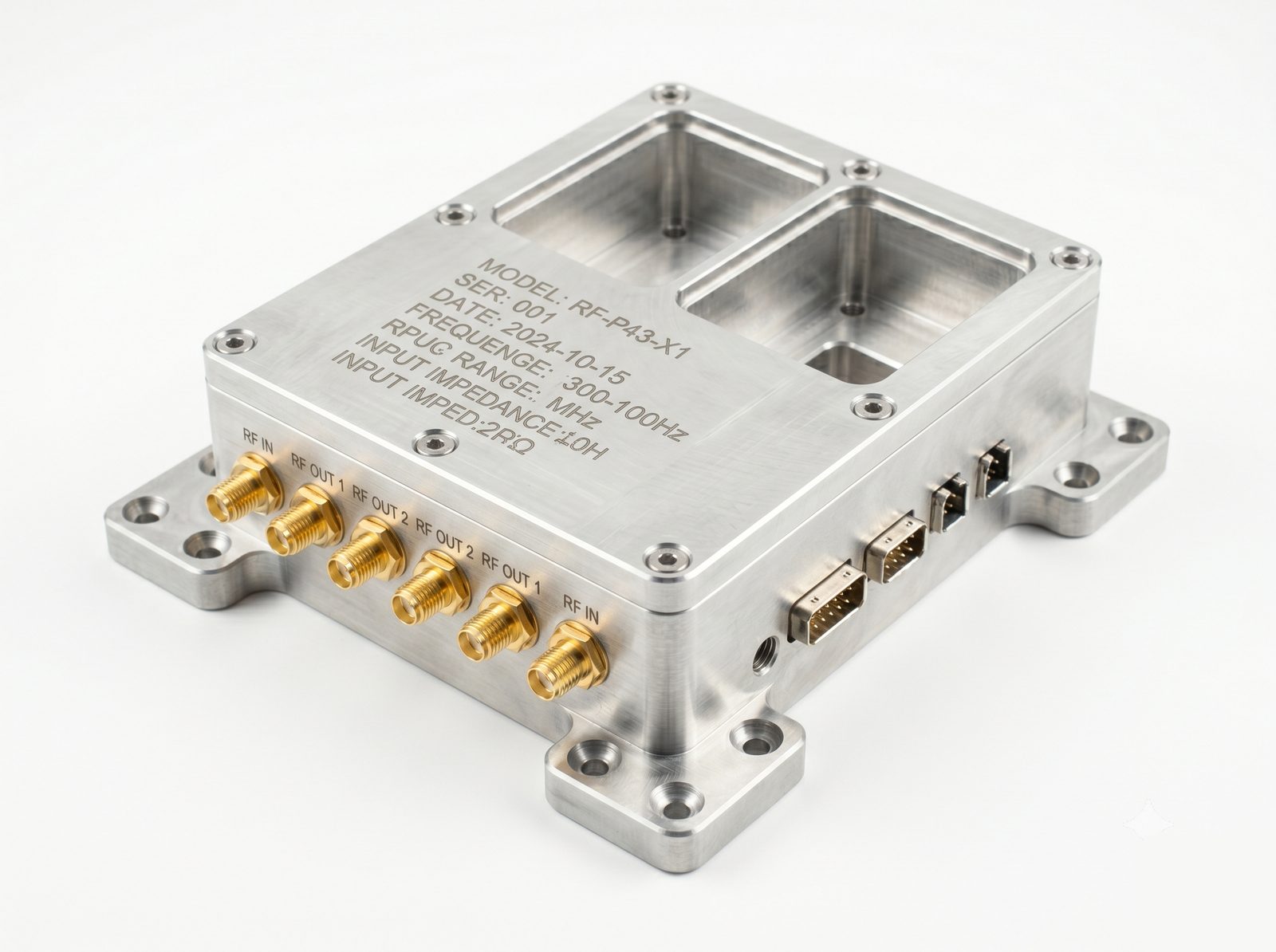
RF and Microwave Payload Housings
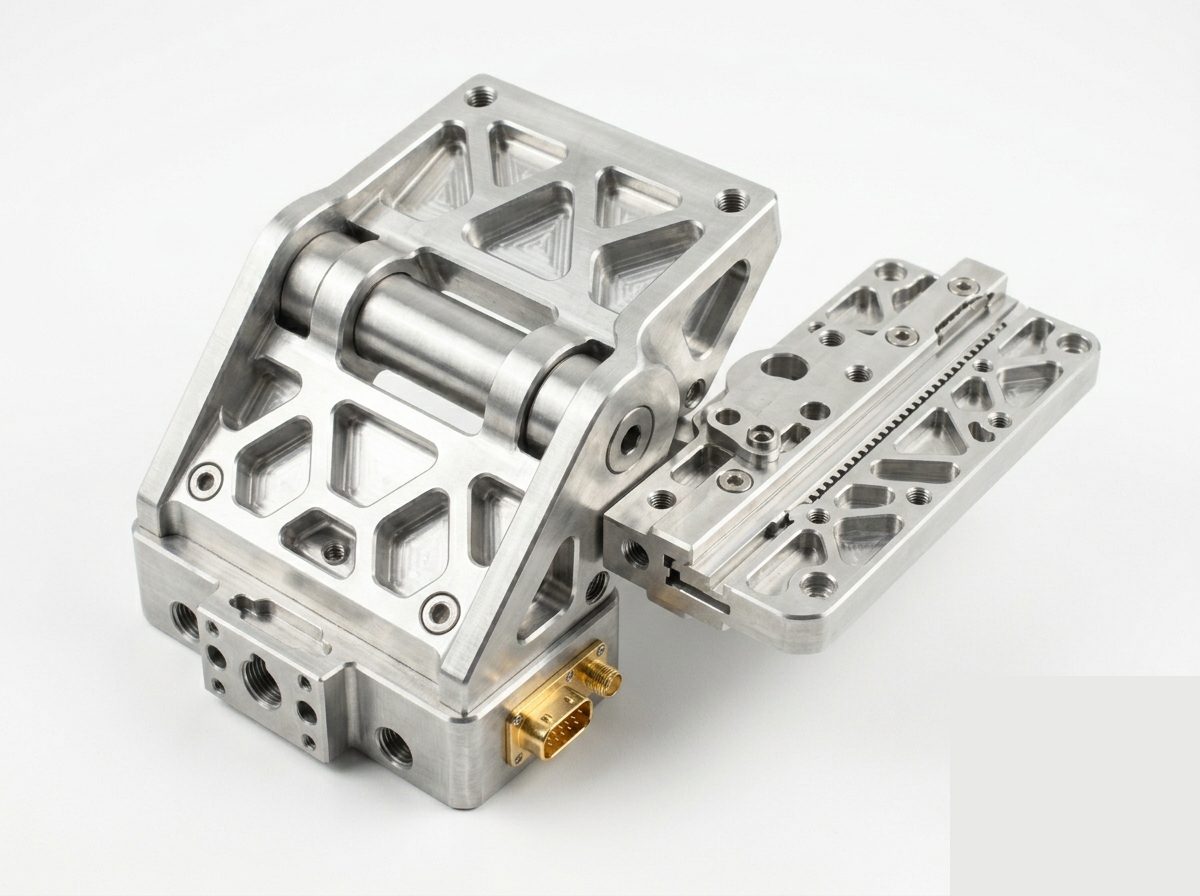
Solar Array Deployment Hardware
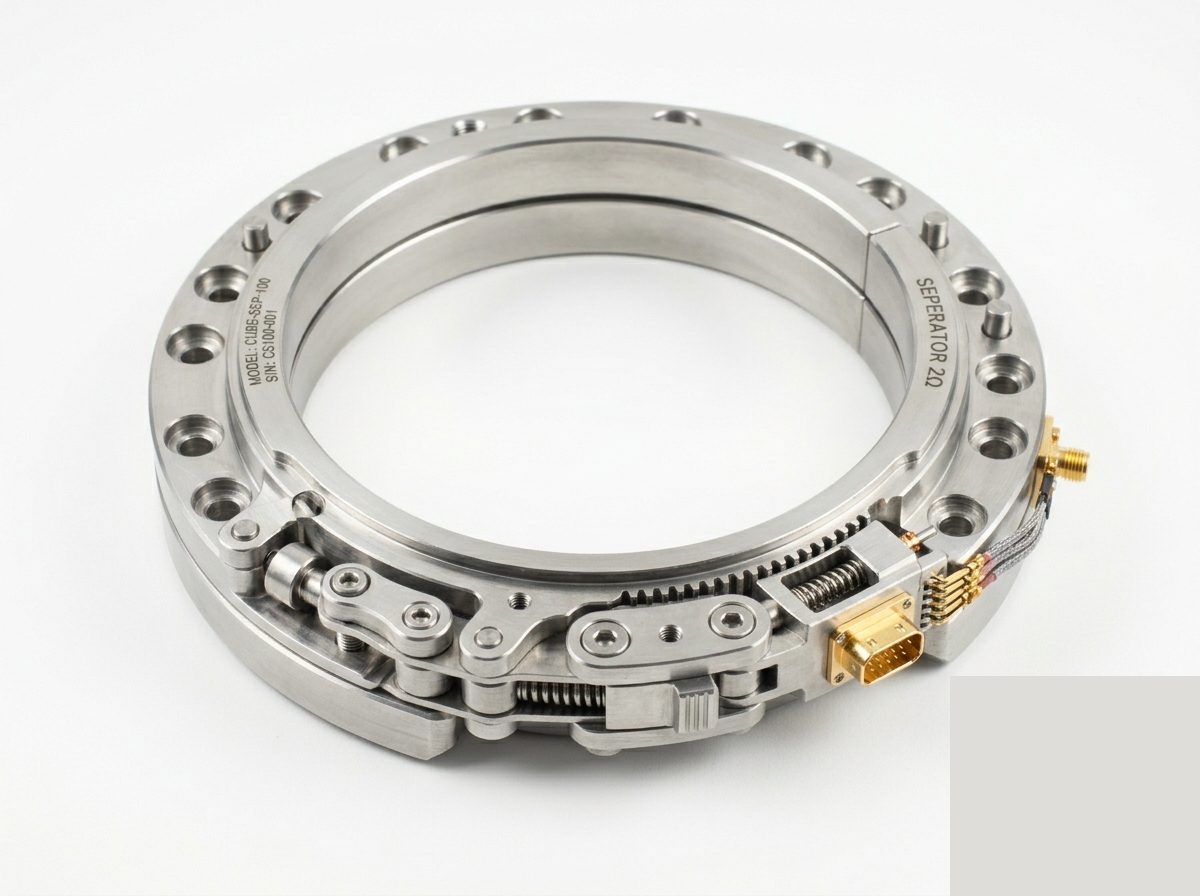
Separation and Release Hardware
Custom Space Hardware
Bus brackets, antenna mounts, star tracker housings, CubeSat chassis and deployment mechanisms. Upload a STEP file and an engineer will review and quote it within 24 to 48 hours.
Upload for Review →Problems We Prevent
Most machine shops have no frame of reference for space-grade requirements. These are the failures that surface at integration, or in orbit.
Mass Budget
Lightweighting pushes wall thickness to the edge of machinability.
Hardware built to a mass budget often has 0.3 to 0.8 mm walls. Shops without thin-wall fixturing experience deliver parts that measure correctly on the machine and out of spec in the assembly.
DFM review flags thin walls, recommends a fixturing strategy and sequences operations to limit distortion.
Thermal Cycling and CTE
Mismatched CTE causes dimensional drift across orbital thermal cycles.
Orbital hardware swings from −180 °C to +120 °C each cycle. Multi-material assemblies with mismatched thermal expansion build up stress and alignment drift over the mission.
CTE mismatches are flagged during DFM, with low-CTE materials such as Invar 36 or Ti-6Al-4V where stability matters.
Vibration and Shock Documentation
Launch qualification needs traceability from raw material to finished part.
Qualification programs need material traceability, inspection records and finish documentation traced to each part serial number. Gaps delay qualification or force rework at program cost.
Every order ships with an MTR to AMS spec, CoC, CMM report and finish documentation, traced to the part.
How a Space Hardware Order Works
Each order gets a space-specific review before any cutting starts, and the qualification documents ship with the parts.
- 1Quote in 24 to 48 hoursUpload a STEP File and Drawing
STEP, IGES or a 2D drawing. Include the material specification (AMS grade), surface finish callouts and any assembly or qualification context. An NDA is available on request.
- 2Space DFM Review
Your engineer checks the AMS material specification, CTE compatibility, thin-wall fixturing, finish outgassing suitability and whether the tolerances are achievable. Issues are resolved before cutting starts.
- 3Material and Finish Confirmed
AMS alloy grade, surface finish type and its outgassing suitability, and any special requirements are confirmed and written into the work order before the order is confirmed.
- 4Manufacture and In-Process QC
3-axis and 5-axis CNC machining with in-process dimensional checks and CMM inspection of critical features. Surface finish, coating type and thickness are confirmed before shipment.
- 512 days standardDelivery with Qualification Documentation
A Material Test Report to AMS spec, Certificate of Conformance, dimensional inspection report and surface finish certification ship with every order. First Article Inspection reports are available on request.
Results
"Factorem flagged a CTE mismatch in our optical payload housing design before we went to production, saving us a qualification failure and a full design iteration. Every part shipped with the documentation our integration team needed on day one."
- ISO 9001:2015 quality management (TÜV SÜD)
- AS9100-capable suppliers in the network
- MTRs and CoCs to AMS spec on every order
Frequently Asked Questions
If your question is not here, an engineer can answer it directly.
Do you manufacture ITAR-controlled space hardware?
No. Factorem makes commercial space hardware under EAR99 and equivalent regulations only. It does not make ITAR-controlled hardware or space articles on the US Munitions List (USML).
What materials do you work with for space applications?
AL 6061, AL 7075, Ti-6Al-4V, SS 17-4 PH, Invar 36 and engineering polymers, plus CuW for thermal management. All materials are sourced to AMS specifications with full traceability documentation.
Can you provide material certifications for space-grade hardware?
Yes. Every space hardware order ships with a Material Test Report to AMS specification, a Certificate of Conformance and a dimensional inspection report. First Article Inspection reports are available on request.
What surface finishes work for space environments?
Black anodize, electroless nickel, MIL-A-8625 Type II and Type III hard anodize, chromate conversion coating and passivation. For space-exposed surfaces the finish is chosen during DFM for outgassing and thermal control.
What tolerances can you hold on structural space components?
±0.005 mm on critical bore and flatness features for optical payload housings, interface plates and reaction wheel mounts. Structural panels are typically ±0.01 mm. Tighter tolerances for precision pointing mechanisms are reviewed case by case.
Do you have AS9100 certification?
Factorem holds ISO 9001:2015 certification (TÜV SÜD). The supplier network includes AS9100-capable facilities for space-grade quality requirements, and their certification documents are available on request.
Source Your Next Space Component
Upload a STEP file with the AMS material grade and qualification context. An engineer reviews CTE, thin walls and documentation, and the quote arrives in 24 to 48 hours.
